Safari Destinations
Mountain Gorillas and Lowland Gorilla Trekking Tours in East Africa: Uganda, Rwanda and D.R. Congo
A face-to-face meeting with a wild gorilla is widely regarded as one of the most moving wildlife experiences available anywhere in the world. In East and Central Africa, three countries offer the opportunity: Uganda, Rwanda, and the Democratic Republic of Congo (D.R. Congo). Between them, they protect both mountain gorillas and eastern lowland gorillas, two remarkable and critically threatened apes that live in very different forests. This guide introduces each destination, explains the differences between the two types of gorilla, and offers practical information to help prospective travellers choose the journey that best suits them.
Mountain Gorillas and Lowland Gorillas: Understanding the Difference
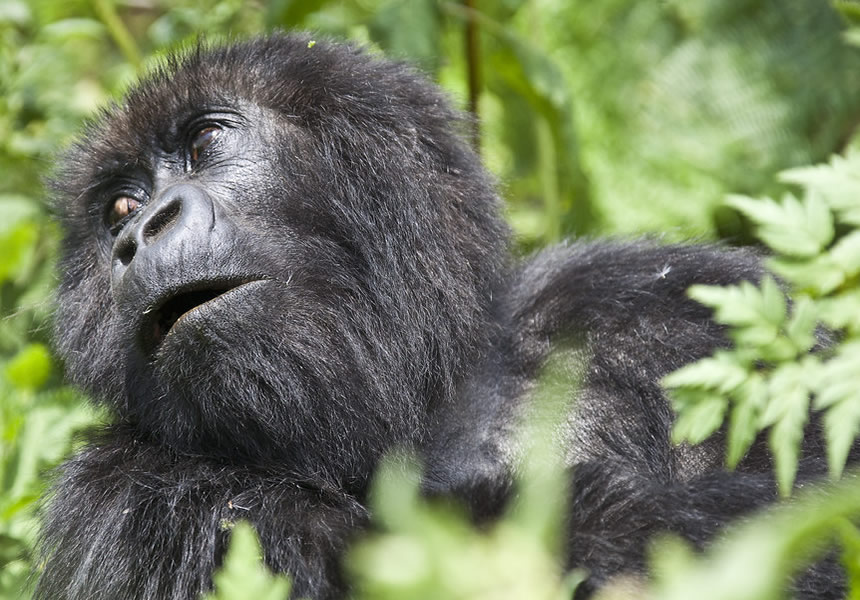
Mountain gorillas live in the cool, misty, high-altitude forests of the Virunga Massif and Bwindi Impenetrable National Park, which together span Uganda, Rwanda, and D.R. Congo. Their population is small, with the total commonly described as just over one thousand individuals, and the species has been one of conservation’s more encouraging recoveries, thanks to decades of protection and carefully managed tourism.
Lowland gorillas, by contrast, inhabit lower-altitude forests and are more numerous. Within East and Central Africa, the principal visitor destination for them is Kahuzi-Biega National Park in D.R. Congo, home to the eastern lowland gorilla, also known as Grauer’s gorilla, the largest of all gorillas. (A separate western lowland gorilla is found in West and Central Africa, including the Republic of Congo, which is a different country from D.R. Congo.) Eastern lowland gorillas have longer limbs, shorter hair, and a distinct build compared with their mountain cousins, and they live in denser, lower and warmer habitat. Both types are listed as threatened, and tourism revenue plays an important role in funding their protection.
Uganda: Bwindi and Mgahinga
Uganda is home to roughly half of the world’s mountain gorillas, which are found in two parks. Bwindi Impenetrable National Park, a UNESCO World Heritage Site in the south-west, is the larger of the two and offers several trekking sectors, each with its own habituated families. Mgahinga Gorilla National Park, a smaller park on the border with Rwanda and D.R. Congo, forms part of the Virunga Massif and offers a more compact experience, with the added possibility of golden monkey tracking.
Trekking in Bwindi is physically demanding, as the forest is dense, steep, and often muddy, but it is also deeply atmospheric. Treks may last anywhere from under an hour to several hours depending on where the family has moved, and porters can be hired to assist. Uganda offers one of the best-value permits in the region. A standard permit costs USD 800 per person for foreign non-residents, with a reduced low-season rate of USD 600 in April, May, and November. Uganda also offers the Gorilla Habituation Experience in the Rushaga sector, which allows up to four hours with a gorilla family still being accustomed to human presence. This permit costs USD 1,500 per person, and multiple sources report that it rises to USD 1,800 from 1 January 2027.
Because Uganda’s gorilla parks lie a considerable distance from Entebbe, many travellers build a longer safari around them, combining gorilla trekking with chimpanzee tracking in Kibale Forest, wildlife viewing in Queen Elizabeth National Park, or a visit to Lake Bunyonyi. Bwindi is also a major birding destination, with the Ruhija sector and its Mubwindi Swamp Trail offering a chance to see Albertine Rift endemics, so travellers with an interest in birds can pursue both passions in the same area.
Comparing the Three Destinations
The three countries differ most in cost, accessibility, and terrain. Uganda offers the best overall value and the most varied itineraries, with the trade-off of longer road transfers and often demanding forest terrain. Rwanda offers the shortest transfers and the most polished logistics, at a premium price. D.R. Congo offers the lowest permit costs and the rare opportunity to see eastern lowland gorillas, but access depends on security conditions that can change quickly.
The experience on the day is broadly similar in Uganda and Rwanda. Groups are limited to eight visitors per gorilla family, treks are led by trackers and armed rangers, and visitors are permitted a single hour with the animals once they are found. The minimum age is 15 years, and visitors are asked to maintain a respectful distance, keep their voices low, and wear a face mask, since gorillas are vulnerable to human respiratory illnesses. Anyone who is unwell must not trek, and flash photography is not permitted.
Rwanda: Volcanoes National Park
Rwanda offers mountain gorilla trekking in Volcanoes National Park, in the north-west of the country, which forms the Rwandan portion of the Virunga Massif. The park lies roughly two to two and a half hours by road from Kigali International Airport, which makes it one of the most accessible gorilla destinations in the world. Rwanda’s roads are well maintained, its capital is modern and well organised, and the overall logistics are notably straightforward.
Terrain in Volcanoes National Park is generally regarded as somewhat more moderate than that of Bwindi, although it varies by gorilla family and some groups still require a strenuous climb through bamboo and volcanic slopes. The permit is the most expensive in the region at USD 1,500 per person for foreign non-residents, and it includes an hour with the gorillas. Rwanda’s emphasis on a premium, low-volume approach is reflected in the quality of its lodges and the overall tone of its tourism.
Rwanda also offers additional experiences for those with time, including golden monkey tracking, visits to the Dian Fossey Karisoke research area, chimpanzee and primate tracking in Nyungwe Forest, and wildlife viewing at Akagera National Park. Together with the short transfers, these make Rwanda a convenient choice for shorter itineraries.
When to Go Gorilla Trekking
Gorilla trekking is possible throughout the year, but the drier months are generally the most comfortable. These are typically June to September and December to February, when trails are firmer and the walking is easier. The wetter months, around March to May and October to November, make trails muddy and slippery, though the forests are lush and visitor numbers are lower. Uganda’s discounted USD 600 permits apply in April, May, and November, which can be an attractive option for travellers who are flexible and comfortable with wetter conditions.
Permits are limited and sell out well in advance, particularly during peak months, so we would recommend booking as early as possible, ideally several months ahead. Prices are set by the Uganda Wildlife Authority and the Rwanda Development Board and are subject to change, and they should always be confirmed at the time of booking.
D.R. Congo: Virunga and Kahuzi-Biega
D.R. Congo offers two gorilla destinations. Virunga National Park, Africa’s oldest national park, protects the Congolese portion of the Virunga Massif and its mountain gorillas, while Kahuzi-Biega National Park, near Bukavu, offers the only opportunity in the world to trek eastern lowland gorillas in their natural habitat. Permits have historically been the lowest-priced in the region, at approximately USD 400 per person in both parks, which explains the interest the destination attracts among adventurous and budget-conscious travellers.
It is essential, however, to speak plainly about current conditions. Eastern D.R. Congo has been affected by armed conflict, and several recent sources report that tourism in Virunga is suspended and that Kahuzi-Biega is closed or that bookings there should be verified in real time before any commitment is made. Operators continue to advertise some itineraries, and the information available online is not always consistent. We would therefore urge any prospective traveller to consult the latest official travel advisories from their own government, to confirm the status of the parks directly with the relevant authorities or a licensed operator, and to obtain written confirmation before paying a deposit. Where conditions are uncertain, postponing a visit is the responsible course. For travellers wishing to see lowland gorillas under more settled conditions, the Republic of Congo’s Odzala-Kokoua National Park offers western lowland gorilla experiences, though at a considerably higher cost.
Blog
Combining Countries
Because Uganda and Rwanda share a border and the same Virunga Massif, they can be combined in a single journey. Mgahinga in Uganda lies close to the Rwandan border, and travellers can often cross between the two countries with a reasonable amount of planning. The East African Tourist Visa, which covers Uganda, Rwanda, and Kenya, can simplify entry for those who wish to visit several of these countries, though requirements should always be confirmed in advance.
Preparing for Your Trek
Preparation is straightforward but worthwhile. Sturdy, waterproof hiking boots, long trousers, long-sleeved tops, gardening gloves, and a light rain jacket are all advisable, along with insect repellent and a camera suited to low-light conditions beneath the forest canopy. A reasonable level of fitness is helpful, and travellers should discuss any mobility concerns with their operator in advance, since families can sometimes be matched to ability. Health precautions, including vaccinations, should be discussed with a medical professional well before departure, and a reputable, licensed operator should be engaged to arrange permits, transfers, and accommodation.
Conclusion
Gorilla trekking in Uganda, Rwanda, and D.R. Congo offers some of the most profound wildlife encounters on Earth, and each destination has its own character. Uganda combines value, variety, and the unique habituation experience; Rwanda offers convenience and polish; and D.R. Congo, when conditions allow, offers a rare and adventurous opportunity to meet both mountain and eastern lowland gorillas. By choosing a destination that suits their budget, fitness, and timeframe, and by relying on current information and trusted operators, travellers can look forward to an experience that will remain with them for the rest of their lives.
Safari packages
Get In Touch
Contact Us
Terrain Journeys is a luxury tour operator offering high-end Gorilla trekking and wildlife safari experiences across East Africa, including Uganda, Rwanda and D.R. Congo. Our expertly crafted journeys are designed for discerning travelers seeking immersive, authentic and exclusive encounters with the region’s rich wildlife and landscapes.
Office Mail
bookings@terrainjourneys.com
Office Number
+256 772 625961
Office Address
Najja Shopping Center - Najjankumbi Entebbe Road